Financial planning is the foundation of a secure and stress-free life. It is not just about saving money—it’s about managing income, expenses, risks, and investments in a structured way to achieve short-term and long-term goals. Without proper financial planning, even a high income may fail to create financial stability.
In this blog, we’ll explain the 5 most important parts of financial planning that help individuals and families build wealth, manage risks, and secure their future.
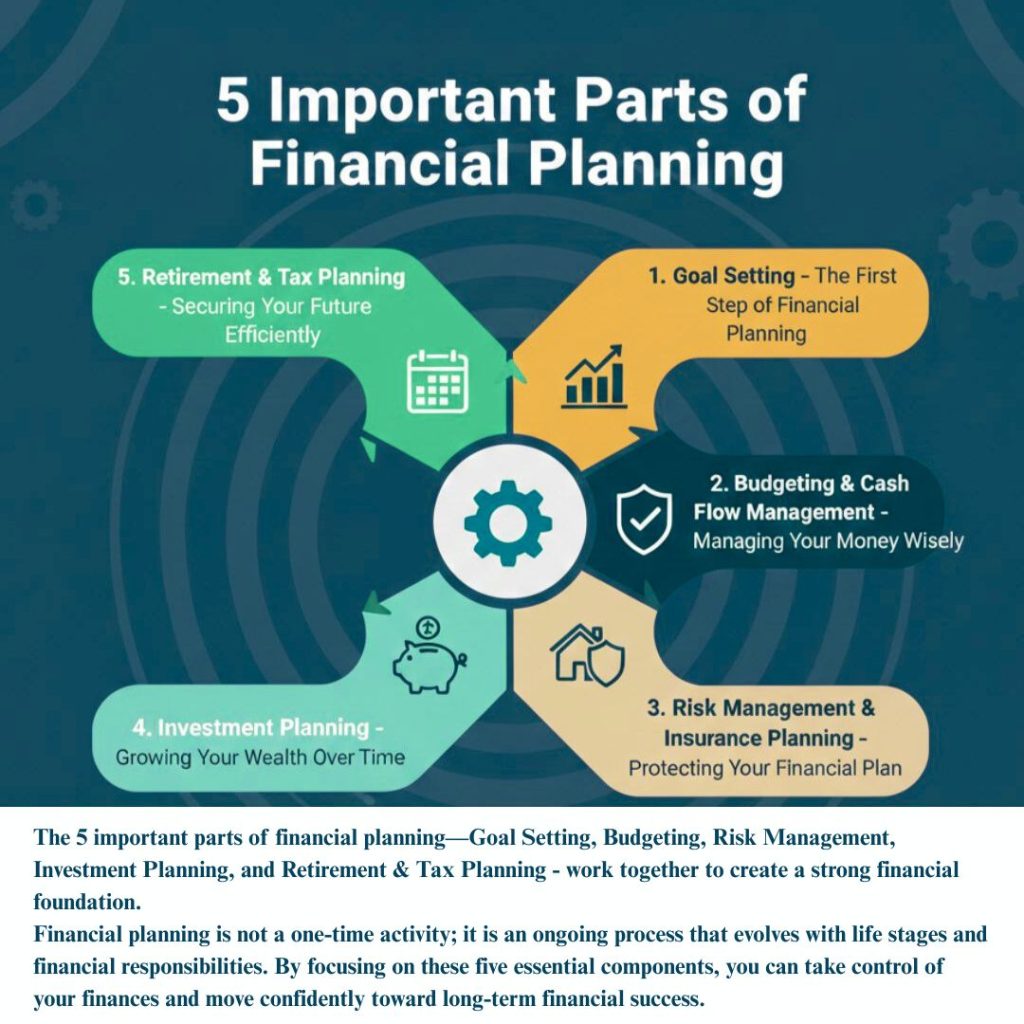
1. Goal Setting – The First Step of Financial Planning
Goal setting is the backbone of financial planning. Every financial decision should be aligned with clear life goals.
Common Financial Goals:
- Buying a home or vehicle
- Children’s education and marriage
- Retirement planning
- Wealth creation
Clearly defined goals help determine how much you need to save and invest. Goals can be short-term, medium-term, or long-term, and each requires a different financial strategy.
SEO Keywords: financial planning goals, goal-based financial planning
2. Budgeting & Cash Flow Management – Managing Your Money Wisely
Budgeting helps you track income and expenses and ensures you live within your means. Proper cash flow management creates room for savings and investments.
Benefits of Budgeting:
- Better control over expenses
- Improved savings habit
- Reduced financial stress
- Clear understanding of spending patterns
A realistic budget ensures your money is allocated efficiently toward needs, wants, and future goals.
SEO Keywords: budgeting in financial planning, cash flow management
3. Risk Management & Insurance Planning – Protecting Your Financial Plan
Risk management is a crucial part of financial planning. Life is unpredictable, and insurance protects your financial plan from unexpected setbacks.
Key Insurance Covers:
- Life Insurance
- Health Insurance
- Accident & Disability Insurance
Adequate insurance coverage ensures that emergencies do not disturb your savings or long-term investments.
SEO Keywords: risk management, insurance planning, financial protection
4. Investment Planning – Growing Your Wealth Over Time
Investment planning focuses on growing your money through suitable financial instruments based on your risk profile and time horizon.
Popular Investment Options:
- Mutual Funds
- SIPs (Systematic Investment Plans)
- Fixed Deposits
- Stocks & Bonds
A disciplined investment approach helps beat inflation and achieve financial goals faster.
SEO Keywords: investment planning, wealth creation, long-term investment
5. Retirement & Tax Planning – Securing Your Future Efficiently
Retirement planning ensures financial independence after your working years, while tax planning helps you save more through smart investment choices.
Why This Step Is Important:
- Ensures stable post-retirement income
- Protects savings from inflation
- Reduces tax liability legally
Combining retirement and tax planning helps maximize long-term returns and create a stress-free future.
SEO Keywords: retirement planning, tax planning, financial independence
Conclusion
The 5 important parts of financial planning—Goal Setting, Budgeting, Risk Management, Investment Planning, and Retirement & Tax Planning – work together to create a strong financial foundation.
Financial planning is not a one-time activity; it is an ongoing process that evolves with life stages and financial responsibilities. By focusing on these five essential components, you can take control of your finances and move confidently toward long-term financial success.